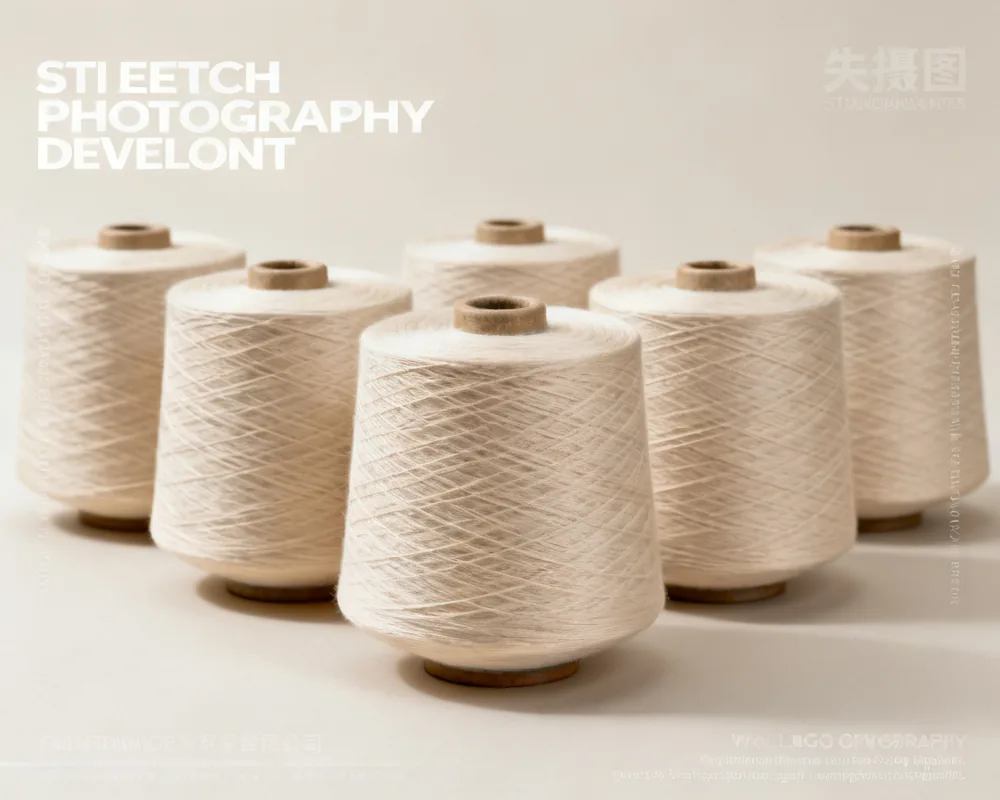
Stretch fiber packages
Hyosung textiles buyers often open with a spandex-type filament. Record composition, denier and the host yarn before comparing hand.
Explore relevant materialsColour and construction
A cone colour and a tow photograph can start the conversation. The agreed standard is still a physical specimen with its package identity.
Discuss your fabric requirements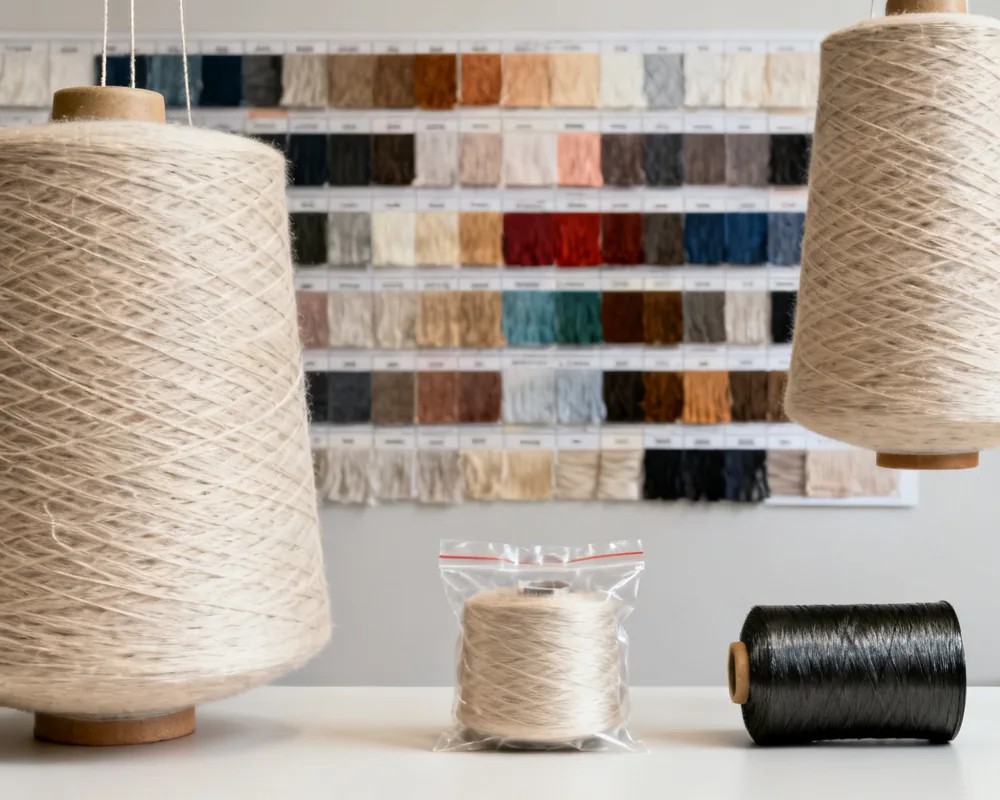
Stretch fiber development and a carbon fiber enquiry do not share one decision path. For a stretch route, separate the elastomer filament, the spin finish and the knit or woven host that will carry it. For a reinforcement route, separate the tow or fabric architecture from the resin system and the layup the buyer actually runs. Hyosung fiber work on this site stays inside those two conversations.
A buyer who types hyosung creora spandex still needs denier or dtex, an elongation target and the fabric construction. Denier is the mass in grams of 9,000 metres. Dtex is the mass in grams of 10,000 metres. The same filament is therefore not the same figure in both units: 40 denier equals 44.4 dtex. Write elongation as a percent from the buyer's own method, and name the gauge length in millimetres. Composition shares, when the buyer already has them, are percent by mass and should sum to 100. A natural-fiber host and a synthetic filament are a selection trade-off on this page: moisture feel on one side, strength and drying on the other, with no environmental ranking attached. A buyer who types hyosung h3065 carbon fiber t1000 grade still needs the form they want to discuss, such as tow, woven reinforcement or prepreg, plus the test method already in their file. Neither search phrase is a certificate, a stock promise or an authorization.
Discuss a development brief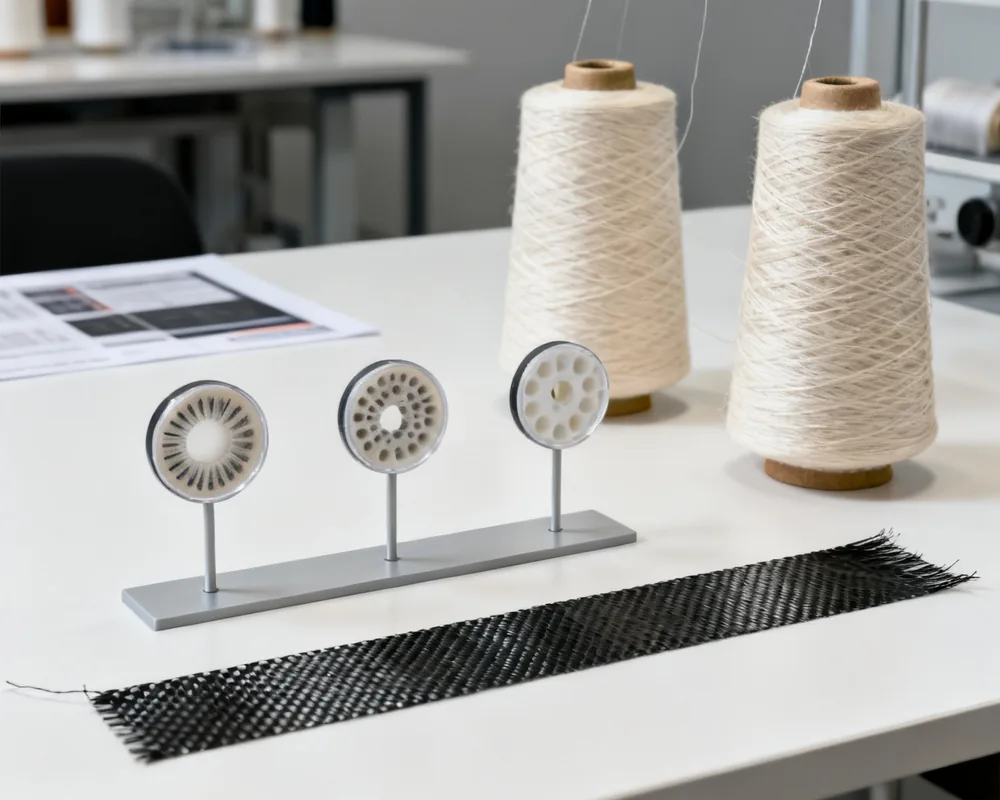
| Use context | Question | Evidence to discuss |
|---|---|---|
| Stretch fiber development | What recovery and hand should the host fabric show? | Linear density, stretch recovery method and a dated knit or woven reference |
| Carbon fiber enquiry | Which grade name and reinforcement form are in the file? | Grade wording, tow or fabric architecture, and the specimen the number describes |
| Mill processing | How will the fiber be warped, knitted or laid up? | Supply format, finish and the downstream GSM or usable width only if a cloth exists |
Hyosung textiles buyers often open with a spandex-type filament. Record composition, denier and the host yarn before comparing hand.
Explore relevant materials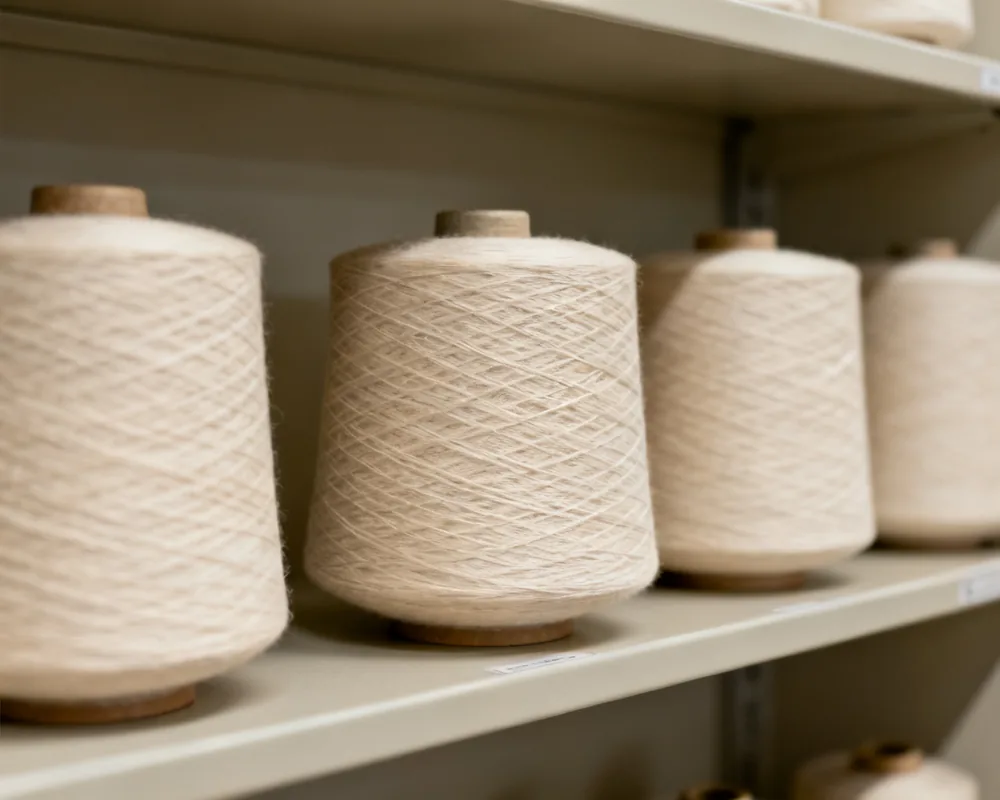
A hyosung fiber note is useful when it names the package, the linear density unit and the process that will consume it.
Explore relevant materials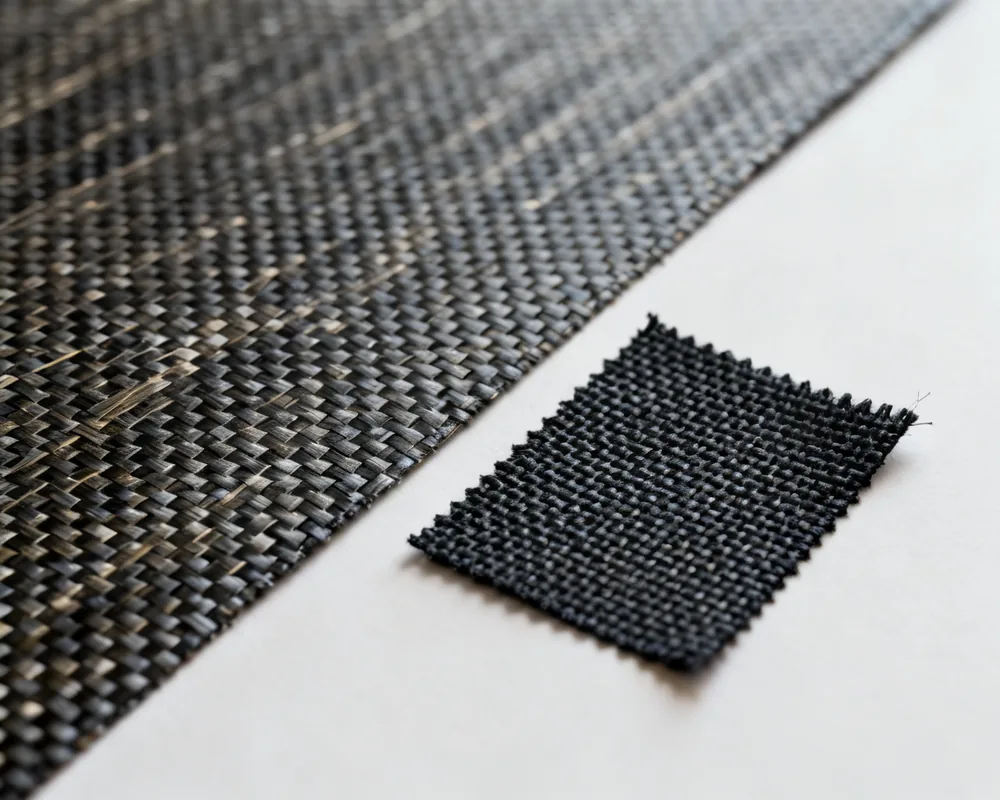
Hyosung carbon fiber and hyosung advanced materials carbon fiber stay grade-specific. Ask for the form and the report scope before quoting a class name.
Explore relevant materials| Field | Target question | Evidence question |
|---|---|---|
| Composition | Name the fiber or blend the brief is actually about | Ask which declaration, and which package, the wording covers |
| GSM | Use mass per unit area only after a cloth exists | Keep the specimen, conditioning and method beside any figure |
| Usable width | Separate cuttable cloth from selvedge when the item is a fabric | Do not copy a cloth width onto a cone or tow |
| Finish | Describe spin finish, size or a downstream treatment | Check whether the specimen still carries that finish |
Mass per unit area describes a cloth, not a fiber package. Two knits both written as 180 g/m² can still differ in denier, stitch density, stretch recovery and pilling. Usable width, in centimetres, is the cuttable distance and is narrower than the full cloth once the selvedge is excluded. For a Hyosung fiber brief, start with composition and linear density, then add GSM only when a fabric specimen is on the table.
Share the package or grade wording you already have, the construction it must enter, and whether you are looking at a lab dip, a shade band or a bulk reference. Hyosung tnc creora spandex, as a query, still needs the host fabric and the finish state. A carbon tow sample needs its grade phrase kept next to the actual form.
Only after the method, specimen state and scope are checked. Tensile strength of a tow is not stretch recovery of a knit. Colorfastness, dimensional stability and abrasion resistance belong to the cloth and the care cycle, not to an unlabeled cone photograph.
Composition · linear density · supply format · cloth-stage GSM and usable width only when a fabric exists